
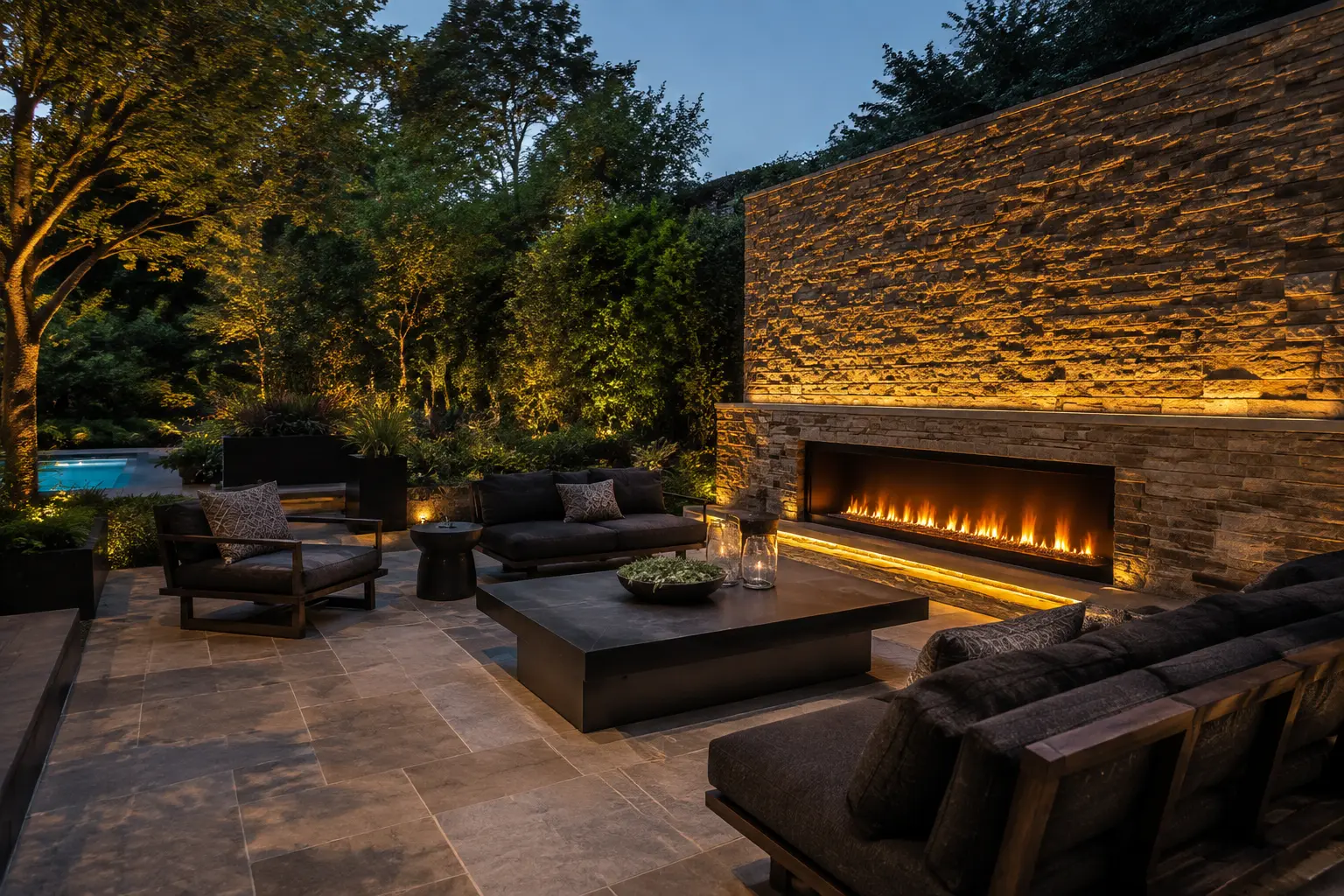
Practical design guidance from the Stone Universe team, informed by more than 25 years of supplying premium natural stone across the United States.
Start with how you want to live outdoors
Before comparing stone colors, define the ways your household will actually use the space. A quiet morning terrace, an outdoor dining room, a fire-side lounge, and a practical route from the kitchen each have different circulation and maintenance needs.
Natural flagstone works beautifully when an outdoor room should feel connected to its surroundings. Its irregular silhouette softens architectural lines, while sandstone, limestone, slate, and quartzite offer distinct textures and color movement.
Ten natural stone ideas with lasting impact
Build the design around a few strong moves rather than competing finishes. Continuity between the patio, pool, planting beds, and architectural details makes a landscape feel more resolved.
- Create an irregular flagstone terrace with planting pockets between select joints.
- Layer a dining terrace beside a softer lounge or fire-pit zone.
- Frame the pool with coordinating bullnose coping and slip-aware paving.
- Use natural ledgestone to anchor an outdoor fireplace or kitchen island.
- Connect separate outdoor rooms with stepping stones through planting.
- Add broad stone treads to handle grade changes safely.
- Introduce low stone seat walls for flexible entertaining.
- Combine warm sandstone with charcoal basalt to define distinct zones.
- Use wall caps and column caps to finish masonry cleanly.
- Integrate lighting, drainage, and planting from day one.
Real stone is not simply a finish. It is part of the architecture and the way a place is experienced.
Choose the right material and finish
Sandstone offers warmth and a tactile finish, limestone feels restrained and architectural, quartzite adds subtle crystalline movement, and slate introduces layered color. Ask for current samples because genuine natural stone changes from one quarry lot to another.
For wet areas, discuss slip resistance and drainage with your installer. Honed surfaces have a refined appearance but may need a different maintenance strategy than natural-cleft, brushed, flamed, or tumbled stone.
Design the foundation before the pattern
Beautiful paving depends on the layers below it. Base preparation, compaction, slope, joints, and edge restraint should suit your local climate and soil conditions. In freeze-thaw regions, professional drainage planning is essential.