
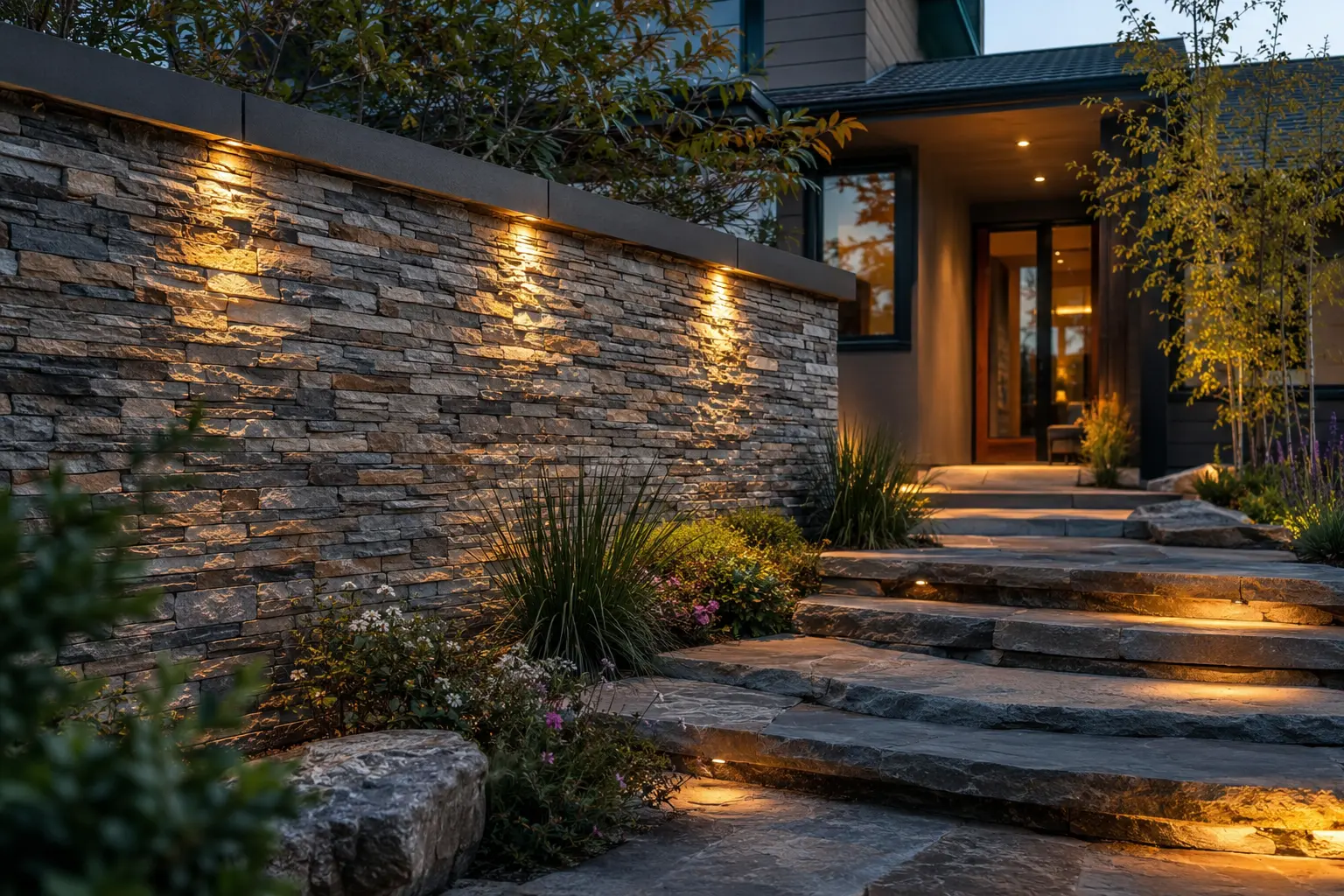
Practical design guidance from the Stone Universe team, informed by more than 25 years of supplying premium natural stone across the United States.
Why ledgestone changes a building
Ledgestone introduces shadow, texture, and human scale that flat finishes rarely achieve. Because every piece carries natural variation, a stone wall shifts throughout the day as sunlight moves across its surface.
Use it selectively on exterior façades, entrance columns, fireplace surrounds, outdoor kitchens, retaining walls, and landscape features.
Understand panels, corners, and individual stone
Panelized ledgestone and thin veneer speed installation while maintaining the appearance of individually stacked natural material. Matching corner pieces are particularly important where an exposed edge should appear full depth.
Ask about panel dimensions, corner returns, nominal thickness, substrate compatibility, and interior versus exterior suitability. Common modular systems use approximately 6-by-24-inch panels with coordinating corners.
Real stone is not simply a finish. It is part of the architecture and the way a place is experienced.
Coordinate stone across the project
Pair cooler ledgestone with charcoal basalt or grey limestone for contemporary architecture. Warmer quartzite and sandstone blend naturally with timber, bronze, landscape lighting, and planted terraces.
Protect exposed walls with correctly detailed caps, flashings, drainage planes, and transitions. These functional details keep architecture clean over time.
Order with realistic allowances
Calculate wall area carefully, then confirm corner footage, cutting allowances, and lead times. Production lots can vary in color and texture, so review current samples and order coordinated material together.